



If you're wondering whether now is a good time to buy or sell a home in Edmonton, the latest market data tells an interesting story. The Greater Edmonton Area housing market has shifted from the intense seller's market of 2024 toward a healthier, more balanced market in 2026. In this report, we analyze the latest home prices, inventory, sales activity, and market trends to help buyers, sellers, investors, and homeowners understand what to expect over the remainder of the year.
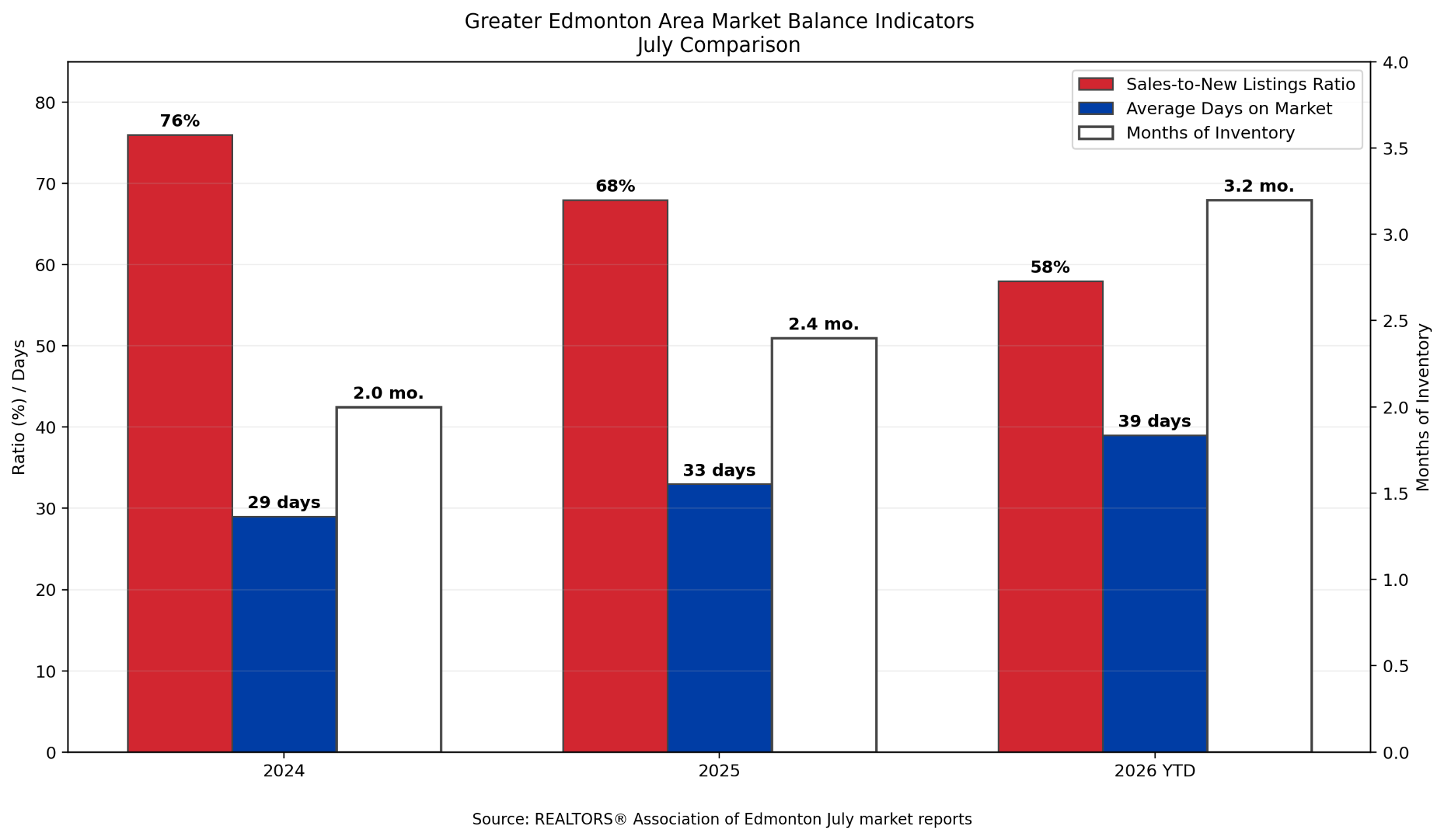
The Greater Edmonton residential housing market has transitioned from a strong seller's market toward a more balanced market over the past year. While demand remains healthy, buyers now have more choice and greater negotiating power as inventory has increased. Active residential listings were up nearly 18% year-over-year in July, while sales activity declined approximately 11%, resulting in a more balanced supply-demand environment. Average days on market increased from 33 to 39 days, reflecting a less competitive pace than seen over the past two years.
Despite slower sales activity, home prices have remained resilient. The overall benchmark price is essentially unchanged from a year ago, while the average selling price remains modestly higher, indicating that well-priced properties continue to attract buyers. Detached homes continue to perform the strongest, whereas apartment condominiums and townhomes have experienced softer demand and slightly weaker pricing.
Compared with this time last year, the market has become more balanced. Inventory has increased, multiple-offer situations are less common, conditional offers have become more frequent, and buyers have more opportunity to negotiate. Sellers can still achieve strong results, particularly for well-presented and appropriately priced homes, but accurate pricing and effective marketing have become increasingly important. Overall, the Edmonton market remains stable and healthy, with market conditions now favouring experienced representation and realistic expectations from both buyers and sellers.
Market Conditions Vary by Property Type
One of the biggest misconceptions in real estate is that the entire market behaves the same way. In reality, Edmonton is made up of several distinct markets, each with its own level of supply, demand, and competition.
The chart below compares the Sales-to-New Listings Ratio (SNLR) for each major residential property type in July 2025 versus July 2026. The SNLR is one of the most widely used indicators of market balance because it measures how quickly new listings are being absorbed by buyers. Higher ratios indicate stronger demand and favour sellers, while lower ratios suggest buyers have more choice and negotiating power.
What stands out is that detached homes continue to operate in a seller's market, supported by strong demand and relatively limited inventory. By comparison, row/townhouses and apartment condominiums have shifted much closer to balanced conditions, giving buyers more selection, longer decision-making time, and greater negotiating leverage than they had a year ago. This reinforces the idea that there is no single "Edmonton market"—the opportunities available to buyers and sellers depend heavily on the type of property they're considering.
Key Takeaways
Detached homes remain the most competitive segment, continuing to favour sellers.
Semi-detached homes have softened slightly but are still generally seller-favoured.
Row/townhouses have moved into a more balanced market as inventory has improved.
Apartment condominiums offer the greatest opportunities for buyers, with slower absorption and increased selection.
Overall, the Greater Edmonton market has transitioned toward healthier, more balanced conditions than we experienced throughout much of 2024 and 2025, creating a market where pricing strategy and expert advice matter more than ever.

REALTORS®
"The market isn't crashing—it’s becoming more professional. Skill matters again."
This environment favors strong brokerages. We’ve experienced these cycles many times since we took over our brokerage in 2008. Wondering where your leads have gone? Worried about your future income? It’s not you, it’s the market.
Why?
Because transaction volume is becoming harder to earn.
When sales were flying, almost everyone looked successful.
Now agents need to:
price correctly
negotiate effectively
market listings better
generate leads instead of waiting for them
That generally benefits experienced agents and brokerages with strong coaching, systems, and collaboration. These are all learnable skills, and there are proven best practices that top agents and brokerages use. We all can get lazy in hot markets, now is the time to refresh to stay ahead of the curve as the market transitions.
"The market isn't crashing—it’s becoming more professional. Skill matters again."
Want to learn about our Commission Guarantee Program?
Use our Sell Right For Your Type system, along with a supportive collaborative environment to make a customized plan to achieve your goals. If you do your part, and you don’t see a minimum 25% increase in your gross income, you don’t pay brokerage fees!
Frequently Asked Questions
Is Edmonton a buyer's or seller's market in 2026? – It depends on the property type, location and area. Overall Edmonton is in balanced, minorly seller favoured
Are Edmonton home prices expected to increase? Yes. With prices still very affordable relative to other major cities in Canada, high wages, and lower taxes, values are anticipated to continue to grow. Replacement cost of new construction is also continuing to rise, pulling up resale housing with it.
Will mortgage rates affect the Edmonton market? Yes
Is now a good time to buy a condo in Edmonton? Yes, condo market is in strong buyer market conditions. Buyers have choice and negotiating leverage. Key is ensuring you’re working with an experienced REALTOR who specializes in condos and has knowledge about which complexes have known issues, upcoming special assessments or other challenges to avoid.
Why are detached homes outperforming condos? Edmonton is a single family dominated market, over 65% of all residential sales historically are single family detached homes. The majority of house sales are $300,000 to $650,000.
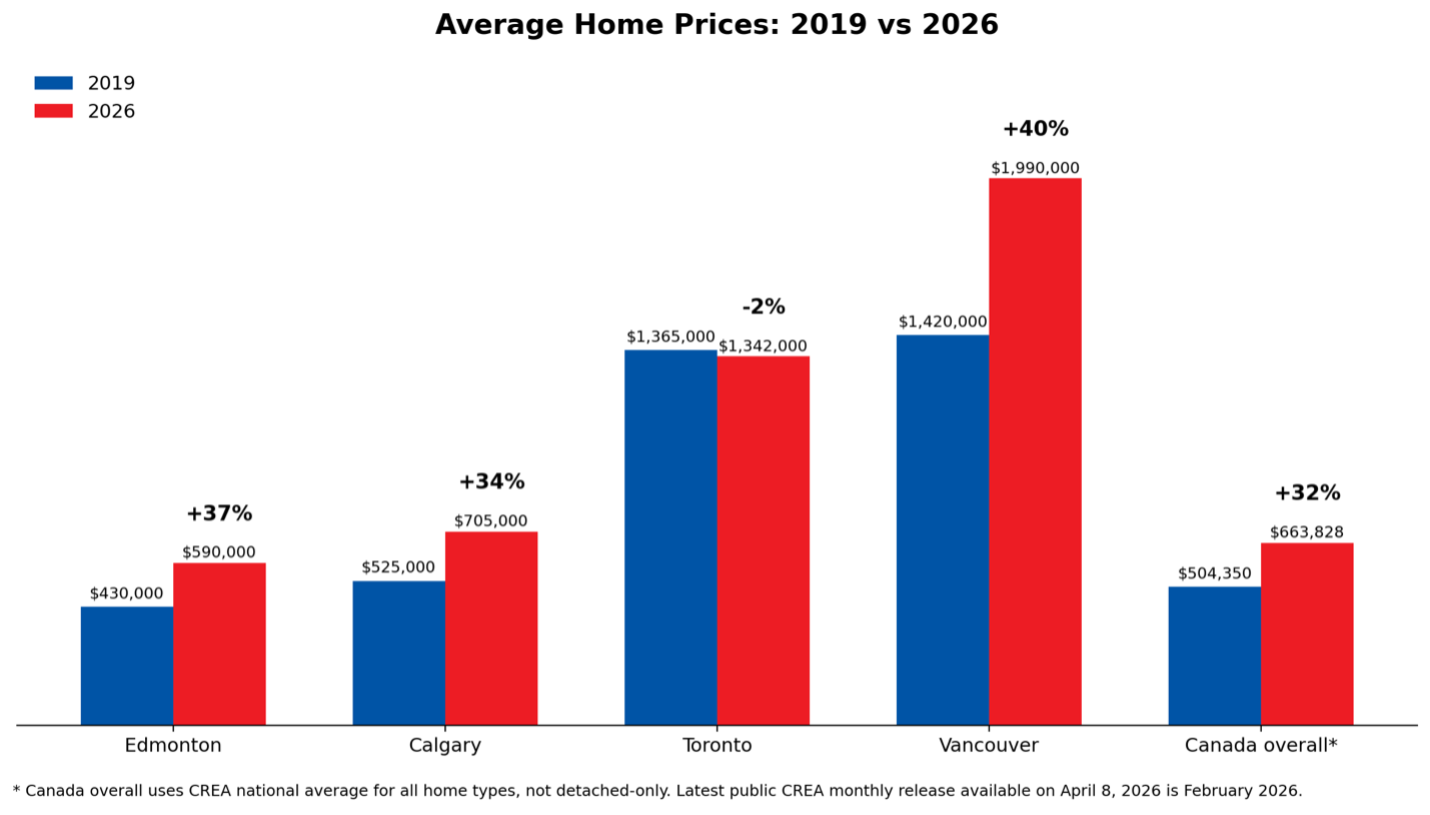
How does Edmonton compare to Calgary, Toronto, and Vancouver?
The average detached home in Toronto costs enough to buy more than TWO detached homes in Edmonton.
For some perspective, we did a recent comparison earlier in the year looking at average prices in 2019 and February of 2026 across the major Canadian markets most buyers compare, Edmonton, Calgary, Vancouver and Toronto as well as Canada overall.
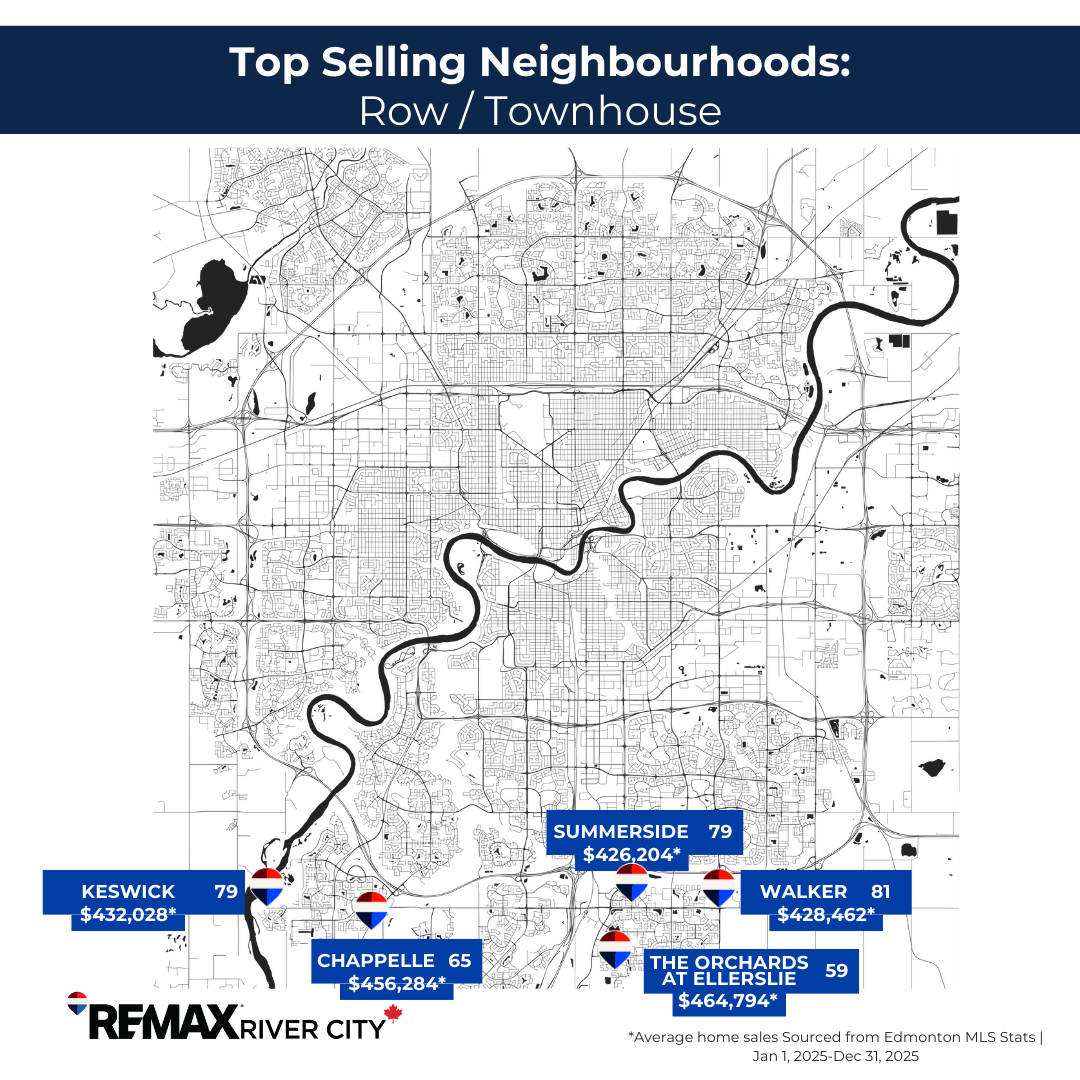
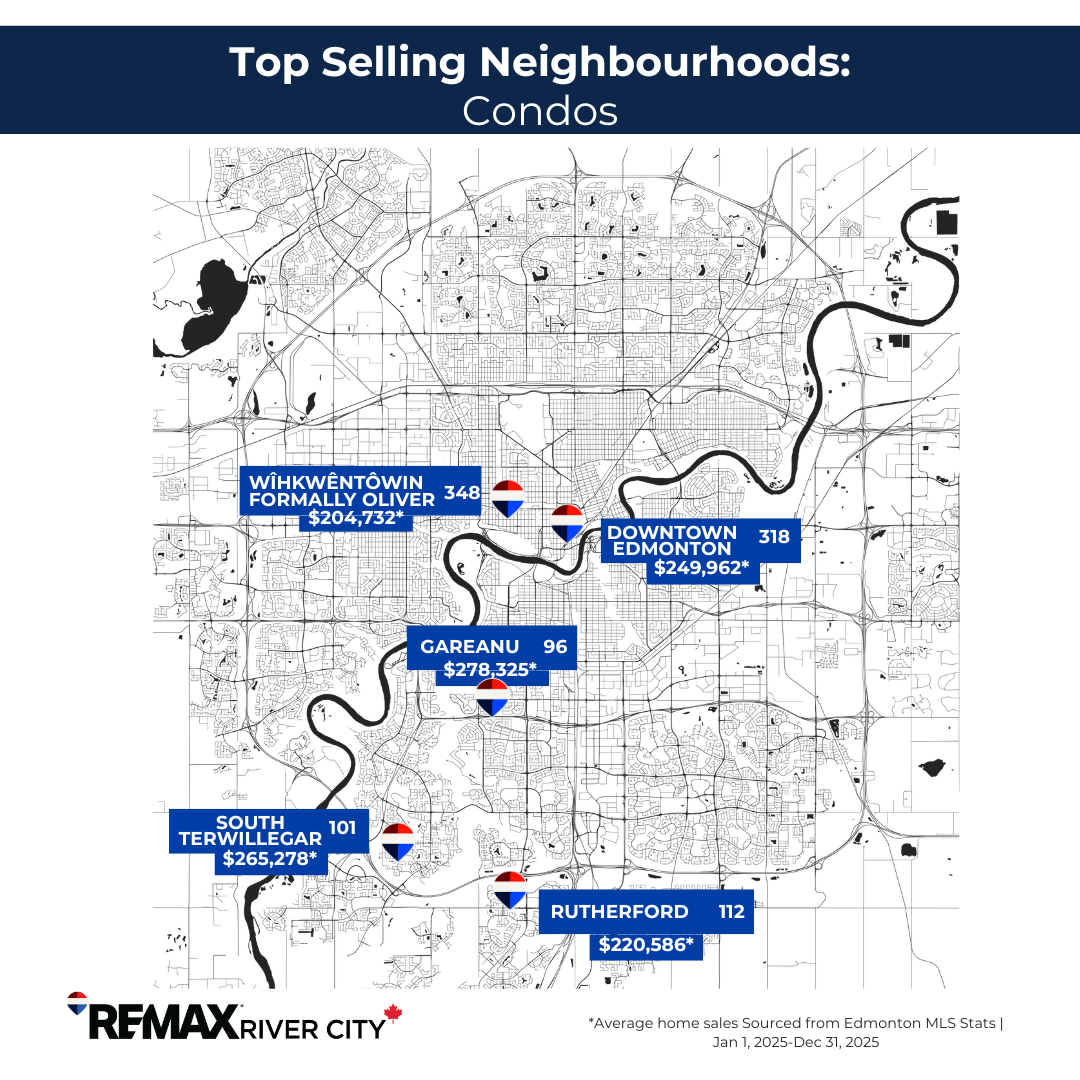
What areas of Edmonton are seeing the strongest demand?
Based on 2025 sales demand, here are the areas along with the average prices.


Find a REALTOR from the most reviewed brokerage in all of Canada two years in a row!



Old Strathcona REALTOR Reviews - South Edmonton REALTOR Reviews - St Albert Trail North Edmonton REALTOR Reviews


